July 24, 2026 · 5 min read
Trenching for Utility Lines: What to Expect
Water, electrical, gas and irrigation trenching from locate call to backfill — depths, timelines and how to prepare your site.
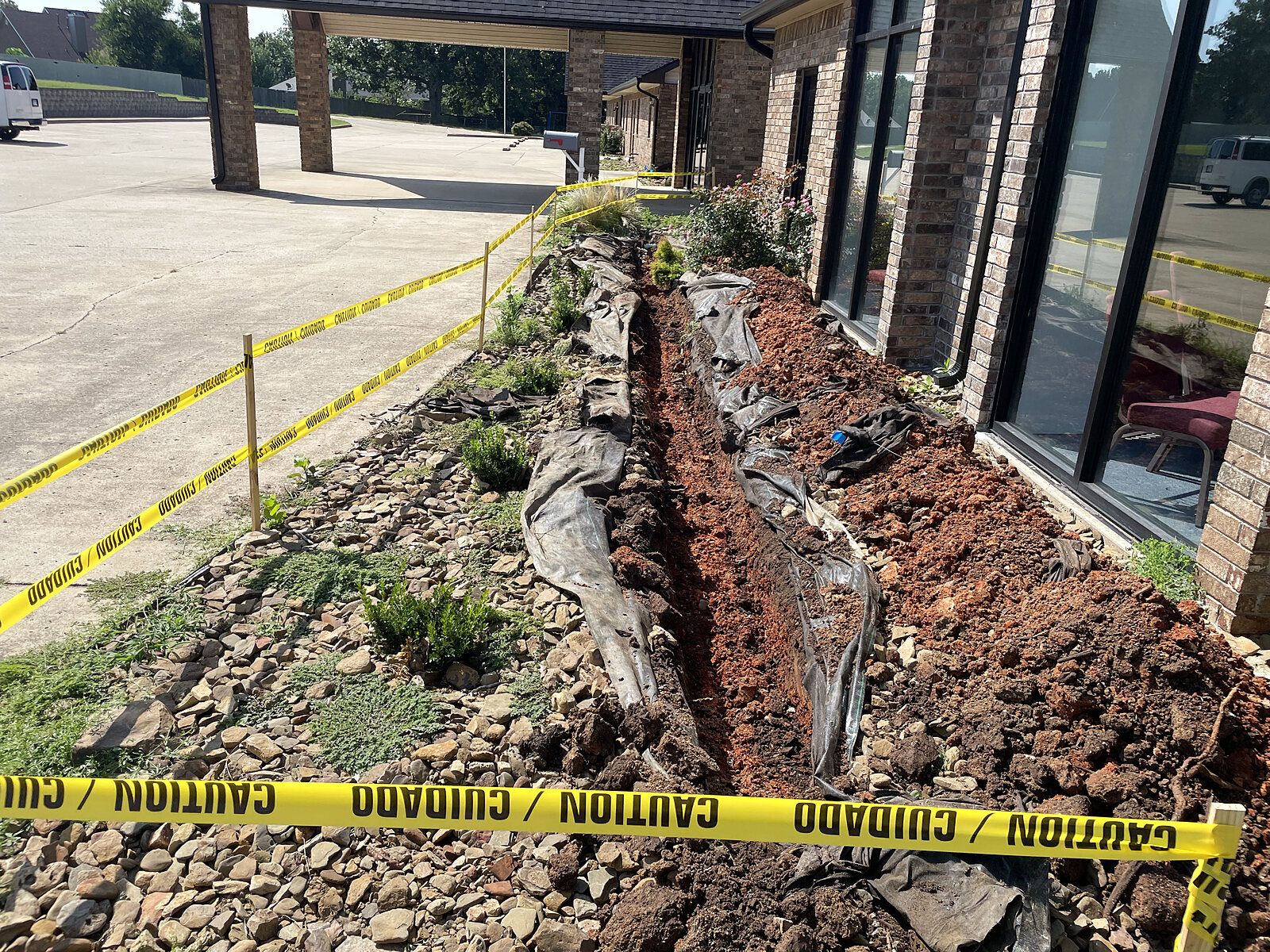
Trenching sounds simple until the day of. Knowing the sequence ahead of time makes the job faster, cheaper and a lot less stressful.
Step 1: Call before anyone digs
Public utility locates are free and required. In Arkansas that is Arkansas 811 — call 811 or submit a ticket online, and allow the legally required notice period before excavation begins. Private lines (irrigation, invisible fence, a line to a shop or pool) are not covered by 811, so tell us where you think they run.
Step 2: Plan the route
The shortest route is not always the best one. We look for a path that avoids tree roots, existing utilities, septic fields and hardscape you would rather not cut. Marking the start and end points with paint or flags before we arrive saves time.
Step 3: Depth depends on what is in the trench
Required cover varies by line type, jurisdiction and whether the line is under a driveway. Water lines are set below the local frost depth; electrical depth depends on voltage and whether it is in conduit; gas and communication lines each have their own requirements. Your permitting authority or utility sets the number, and the inspection happens while the trench is still open — so do not backfill early.
Step 4: Bedding, install, inspect, backfill
- Sand or fine bedding under and over the line so rock does not damage it
- Warning tape or conduit where the code requires it
- Inspection while the trench is open
- Backfill in compacted lifts, then final grade so the trench does not sink over the winter
How to prepare
- Unlock gates and clear a path wide enough for a compact machine
- Move vehicles, trailers and anything stored along the route
- Point out sprinkler heads, valve boxes, pet fence wire and any line you or a previous owner installed
- Keep pets inside on dig day — the trench is open until it is inspected
Most residential trenching runs are a one-day job with our equipment. If a permit or inspection is involved, we will tell you up front so the schedule accounts for it.
Keep reading
- 5 Signs Your Yard Needs a French Drain
Standing water, soggy spots and a damp crawl space are all drainage symptoms. Here is how to tell when a french drain is the fix.
- What Makes Excavation Eco-Friendly (and Less Messy)
Right-sized equipment, protected turf and less hauling. How small-machine excavation lowers the impact on your property.
- ADU Site Prep: A Practical Checklist Before the Slab
Access, grading, utilities and drainage. The excavation work an accessory dwelling unit needs before any concrete is poured.